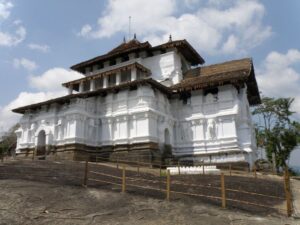
Lankathilaka temple, Kandy, Photo: Bluesy Pete
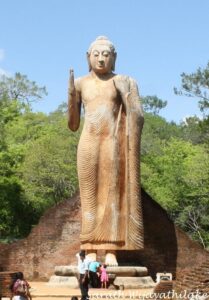
The 7th century Maligawila Buddha statue- tallest in Sri Lanka, Photo: S.G. Seyone
This gem-shaped island just off the southern tip of India in the Indian ocean with a population of around twenty-four million people, encapsulates a captivating history, tradition, culture and architectural evolutions of over three thousand years. Indeed, Sri Lanka earlier called Ceylon, can be novel in experiencing a life-pattern which is still not caught-up in the twenty-first century mad frenzy of development and stressful living. Nature’s benevolence here allows the citizens and the tourist to appreciate the stark glory of the five elements that make our environs – earth, fire, water, air and space. My recent flash-trip to this land of sprawling tea gardens was a rejuvenating visual therapy through expose to nature’s mystic landscape delights.
Visiting any country, I habitually always delve into her historical background – to understand the context better. Being on the important ancient maritime Silk Route, colonizers found their way here, and have had their share of contributions to Sri Lanka’s architecture and cultural evolutions. It was first the Portuguese in the sixteenth century followed by the Dutch and then the British in early nineteenth century, with finally in nineteen forty-eight, independence being won by the Sinhalese (the inhabitants) with the establishment of the Dominion of Ceylon and eventually becoming a Republic in nineteen seventy-two. Today a developing country, with a rich ecosystem of flora and fauna, this distinctive island country is a delight for the travelers, nature-lovers and also professionals pursuing exposure to architecture, craft, heritage and traditions.
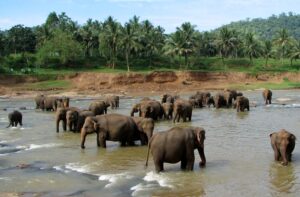
(Above) Picturesque Elephant Orphanage, Pinnawala, Photo: Bernard Gagnon
The secret of discovering the undulating, dense and green contoured landscape of this country is to travel by road. The smooth drive from Colombo to Kandy gives an insight to the small towns/villages and the abundance of agricultural activity of the coastal plains, and then opens up to lush tea gardens on the misty mountains of the highlands. In-between, a stop-over at the Pinnawala Elephant Orphanage with the largest herd of elephants in the world, is indeed worth it for the picturesque setting and unique encounter with such a large herd of elephants.
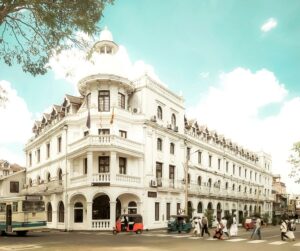
Colonial Queens Hotel, Kandy, Photo: Promodhya Abeysekara
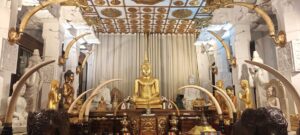
Interior of the Buddha Tooth Relic Temple, Kandy, Photo: Spaul
Kandy is said to be the cultural capital of the country with highlights such as the Temple of the Sacred Tooth Relic – a UNESCO World Heritage site and housing a sacred tooth of Buddha, the calming Kandy lake, the fourteenth century Lankatilaka Buddhist temple constructed in Dravidian and Indo-Chinese architecture styles, the lush Perademiya Botanical Gardens with 4000 species of plants, including orchids, spices, medicinal plants and palm trees and British era buildings such as the nineteenth century built Queens Hotel – earlier a residence.
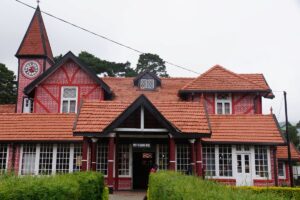 Nuwara Eliya Legacy – A heritage building now a post office, Photo: Dan Arndt
The mountain drive from Kandy to the hill city of Nuwara Eliya often referred to as ‘Little England’ probably because of the cool climate and colonial architecture, is a very satiating one. The variety of the thick foliage undulated with water streams across the well-tarred winding hill roads and then the fresh sights of the never-ending tea gardens are indeed captivating. This town boasts of a well-preserved nineteenth century colonial heritage in buildings such as the Mock Tudor residence, the Grand hotel, the Post Office block and others. Vast stretches of gardens and parks such as the Hakgala Botanical Gardens and the Victoria Park are a forte of this region. And the calming waters of the Gregory lake with the back-drop of the mountains provide a meditative pulse in the surroundings.
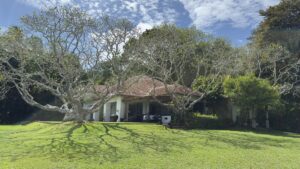
Architect Geoffery Bawa’s Country House, Bentota, Photo: Eco 2004
Due to paucity of time from our side, we were advised to be selective and make time to visit the luring environs of the small beach town of Bentota and of course Colombo- the capital and main urban hub of the island. Bentota with umpteen restaurants and resorts across the golden-yellow sandy beaches is a traveler’s delight with a visit to the serenity of the Bentota lake and experience the intensity of the mangrove lagoons is worth-it.
Talk about Ceylon, and immediately comes to mind the name of master-architect Geoffery Bawa- the tropical modernist in architecture who was headquartered in Colombo. His architecture is a strive for an environmental-friendly and seamless integration with nature in design as projected in his projects such as the Lunuganga Estate (Bentota), Sri Lankan Parliament Building (Colombo), Heritance Kandalama Hotel (Dambulla), De Saram House and others. An architect colleague in this country observed that “In the recent times, quiet a few practices who blend tropical modernism with sustainability have made a mark here. International practices have also collaborated thus changing the skyline of urban cities like Colombo and providing a thrust for global trends in the profession. Sri Lankan practices such as SWA, KWA Architects, MMGS Architects and such others take the lead.”
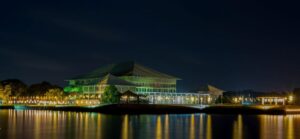
The Parliament of Sri Lanka, Photo: Kolitha De Silva
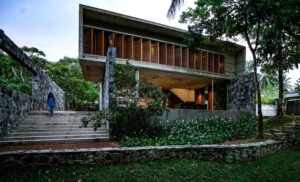
Tropical Villa, Colombo, Photo: MMGS Architects website
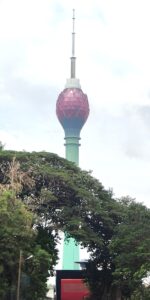
The Columbus Lotus – highest structure of Sri Lanka. Photo: Spaul
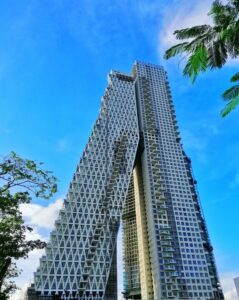 The Altair twin towers, Colombo, Photo: Mohammad Afras
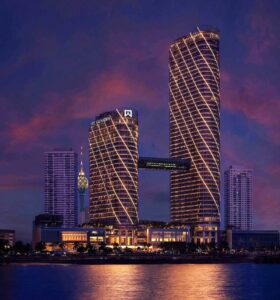 ITC Ratnadipa Hotel, Photo: Gensler Architects website
One very appreciable point that struck me on entering the Colombo precincts was not seeing large-scale bill-boards of politicians as so very often witnessed in Indian cities. Colombo, the capital and the largest city of the country no doubt is a pleasing reflection of the cultural traits, the historic significance of the colonial era in architecture, and above all, the present aspirational surge in the happy-go-lucky Sri Lankans towards achieving a more contemporary lifestyle. The city (population of around seven lacks) with the Indian Ocean on one side, is a rich urban kaleidoscope of heritage of the Portuguese, Dutch and British styled architecture on one side, and the glamour of modern-day skyscrapers, sports pavilions, water bodies… Some of the stand-apart heritage buildings are the Colombo Dutch Museum, Presidential Secretariat, Prime-minister’s Office Block, the historical Cargills & Millers building, etc. Skyscrapers constituting hotels, offices, residences – all can be witnessed blending with the heritage blocks.
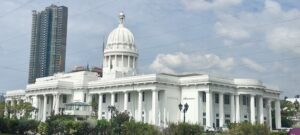 Colombo Heritage – Colombo Municipal Council, Photo: Spaul
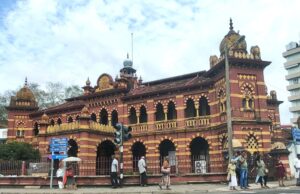
Victoria Memorial Hospital, Photo: Spaul
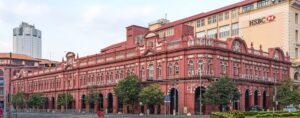 The 1906 Cargills Building
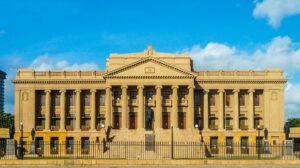
The Old Parliament Building, Photo: Weranga Rajapaksha
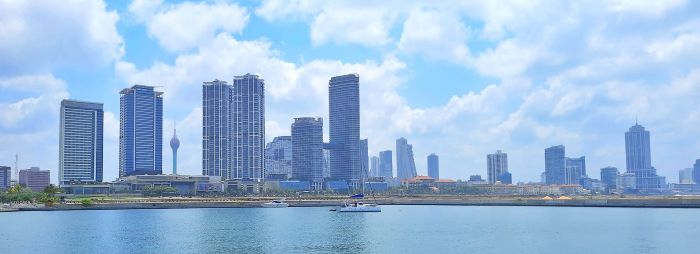
Colombo bears an exciting pulse. There is a vibrancy in the landscape with well ornated parks and water bodies, a cultured and hospitable society that has preserved its heritage, a buzing city aiming to be global while evolving with context, and importantly, proud to showcase the culture and tradition of the inhabitants. The steady new development of the Port City evolving with modern-day planning principles and advanced technology, is adding a new dimension to the urban-scape of the city. Though Buddhism is the main religion with pagodas and Buddha’s statues a frequent site, one observed a mutual respect for all religions.
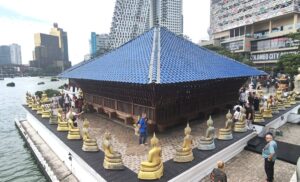 Iconic Gangaramaya Temple, Colombo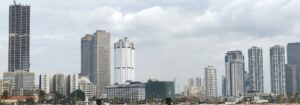
Emerging Colombo – a view of the city from the Port City
The Sri Lankans are a resilient lot – as so very often displayed in combating the natural disasters frequenting the island country. They are proud of their traditional centuries-old craft of mask making, batik work, wood carvings, bamboo weaving, etc. Appreciable indeed it was to observe the sensitivity of the inhabitants and authorities to strive for garbage-free surroundings and streets. The country has seen its ups and downs, and now appears to have set a steadfast course – economically, politically and technologically. I returned with a resolve to continue the Sri Lankan explorations of the so many vantage points missed out in this trip.